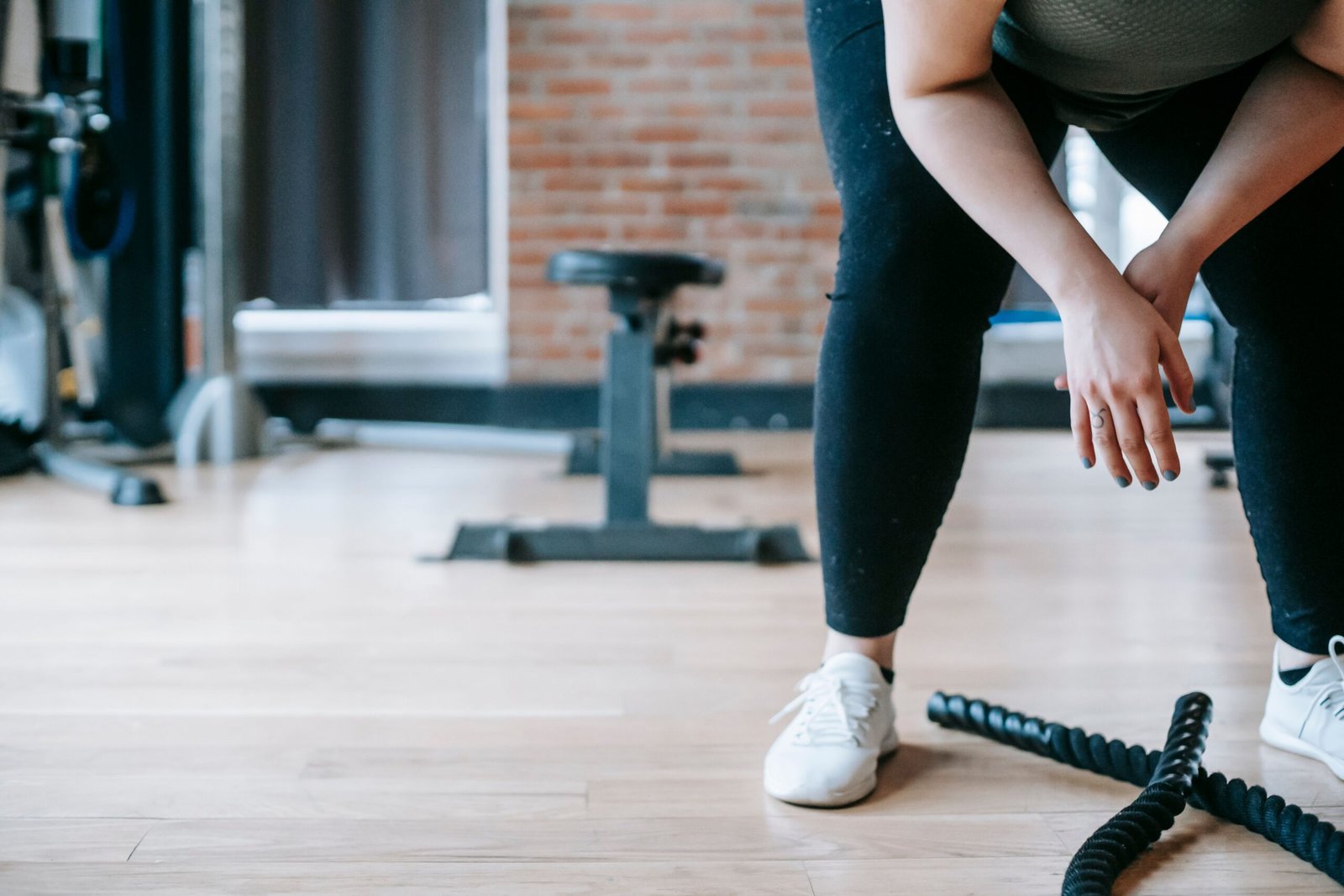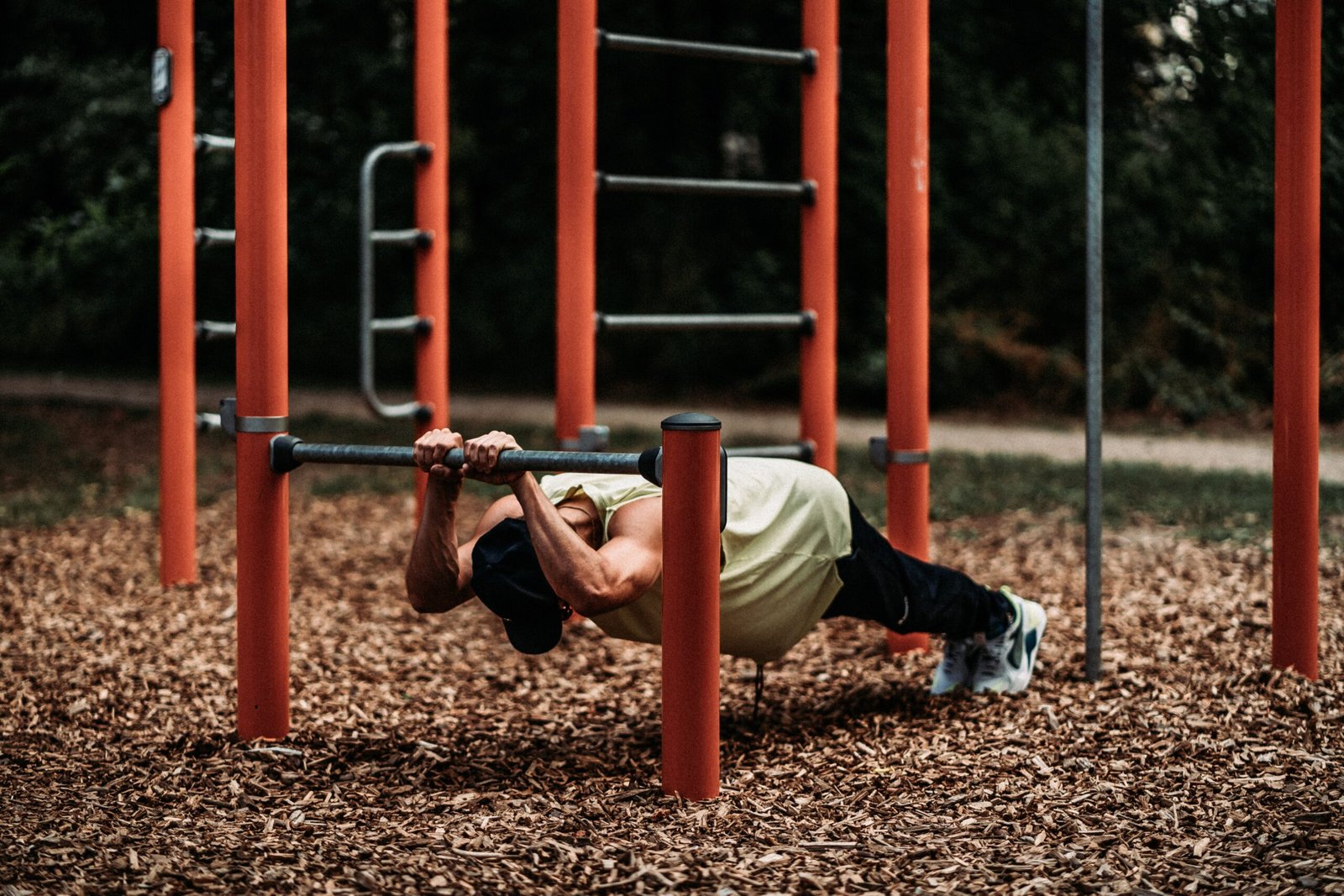
There’s a common assumption that real strength training requires a gym membership, a rack of dumbbells, or at the very least a barbell and some plates. It’s an understandable assumption, since most fitness content online is filmed in gyms, but it’s simply not true. Your own body provides more than enough resistance to build real, meaningful strength, especially if you’re just getting started.
Bodyweight training has a bit of an image problem. It’s sometimes seen as a lesser option, something you do only if you can’t get to a gym, rather than a legitimate training method in its own right. In reality, bodyweight exercises can build serious strength, improve mobility, and lay a foundation that will serve you well even if you eventually do add weights into the mix. This guide will walk you through exactly where to start, how to structure a simple routine, and how to keep progressing without any equipment at all.
Why Bodyweight Training Works
Strength training, at its core, is about progressively challenging your muscles so they adapt and get stronger over time. That challenge can come from a barbell, a dumbbell, a resistance band, or your own body weight, moved through space in ways that require your muscles to work.
Movements like push-ups, squats, and lunges recruit large muscle groups and often multiple muscle groups at once, which makes them efficient and functional. Functional in this context just means the strength you build tends to transfer well to everyday movement, like getting up from the floor, carrying groceries, or climbing stairs without feeling winded.
Bodyweight training also has a few practical advantages worth mentioning. It requires no equipment, so there’s no barrier of cost or access. It can be done almost anywhere, which makes consistency easier. And it tends to be gentler on the joints in the beginning stages, since you’re working with a resistance level, your own body weight, that you’re already used to carrying around every day.
None of this means bodyweight training is automatically easier than lifting weights. As you’ll see, there are ways to make bodyweight exercises quite challenging, even for people who’ve been training for years.
Setting Realistic Expectations
If you’re brand new to strength training, it’s worth understanding what a beginner routine can realistically achieve and over what kind of timeframe.
In the first several weeks, a lot of your early progress will actually come from your nervous system getting better at recruiting your muscles, rather than the muscles themselves changing much yet. This is sometimes called neural adaptation, and it’s why beginners often see quick strength improvements early on, sometimes within just a couple of weeks, before visible muscle changes show up.
Real, visible changes in muscle tend to take longer, often several months of consistent training, and results vary quite a bit from person to person based on factors like age, genetics, nutrition, and consistency. The important thing to hold onto is that strength gains happen well before visible changes do, so don’t get discouraged if you don’t see dramatic differences in the mirror within the first few weeks. The strength is building underneath the surface.
The Core Movement Patterns
Rather than thinking about individual exercises, it helps to think in terms of movement patterns. This makes it much easier to build a well-rounded routine and to swap exercises in and out as needed.
Squat pattern. This covers any movement where you’re bending at the hips and knees to lower your body, like a bodyweight squat or a lunge. This pattern primarily works your quads, glutes, and hamstrings.
Hip hinge pattern. This involves bending primarily at the hips with less knee bend, like a glute bridge. This pattern targets your glutes and hamstrings, and it’s an important complement to the squat pattern since many people neglect it.
Push pattern. This covers pushing movements like push-ups, which primarily work your chest, shoulders, and triceps.
Pull pattern. This is trickier without equipment, since most pulling exercises benefit from something to pull against, like a bar or a suspension trainer. Without equipment, this pattern is harder to train directly, though some creative options exist, which we’ll cover shortly.
Core pattern. This covers exercises that train your midsection to stabilize your spine, like planks. A strong core supports nearly every other movement pattern and plays an important role in everyday function and injury prevention.
A well-rounded beginner routine touches on most of these patterns, which is exactly what the routine below is built around.
Foundational Exercises to Learn First
Before diving into a full routine, it helps to get familiar with a handful of foundational movements. Focus on quality over quantity here. It’s far more valuable to do a smaller number of reps with good form than to rush through a higher number with sloppy technique.
Bodyweight squat. Stand with your feet roughly shoulder-width apart, then lower your hips back and down as if sitting into a chair, keeping your chest up and your weight through your heels. Lower until your thighs are roughly parallel to the floor, or as far as feels comfortable, then push back up to standing.
Push-up. Start in a plank position with your hands slightly wider than your shoulders. Lower your chest toward the floor by bending your elbows, keeping your body in a straight line from head to heels, then push back up. If a full push-up is too difficult right now, doing them from your knees or against an elevated surface like a countertop or sturdy table is a completely legitimate way to build up to the full version.
Glute bridge. Lie on your back with your knees bent and feet flat on the floor. Push through your heels to lift your hips toward the ceiling, squeezing your glutes at the top, then lower back down with control.
Reverse lunge. From standing, step one leg back and lower your body until both knees are bent at roughly 90 degrees, then push back through your front foot to return to standing. Alternate legs, or complete all reps on one side before switching.
Plank. Hold a position on your forearms and toes, keeping your body in a straight line without letting your hips sag or pike upward. This is primarily a core stability exercise, and quality of form matters more than how long you can hold it.
Superman. Lie face down and lift your arms, chest, and legs slightly off the floor at the same time, engaging your lower back and glutes, then lower back down. This helps balance out all the forward-facing pushing movements in a typical routine.
These six exercises form the backbone of a solid beginner bodyweight routine, and you can build an effective program using nothing but this list for quite a while before you’d need to add variety.
Solving the Pulling Problem
As mentioned earlier, pulling exercises are the trickiest to replicate without equipment, since most pulling movements benefit from having something to pull against. A few options can help fill this gap:
If you have access to a sturdy table, you can perform inverted rows by lying underneath it and pulling your chest up toward the edge, gripping the sides. This mimics a rowing motion reasonably well.
A doorway pull-up bar is a relatively inexpensive piece of equipment, often under a modest price, that opens up pull-ups and rows as options without needing a full gym setup.
Resistance bands, while technically equipment, are cheap, portable, and can simulate rowing and pulling movements effectively if you’re willing to invest in this one inexpensive item.
If none of these are available to you, it’s not the end of the world. Your routine will simply be a bit more push and squat dominant for now, and you can address the pulling gap later if you gain access to any of these tools.
A Simple Beginner Routine
Here’s a straightforward, full-body routine you can do two to three times per week, with at least one rest day between sessions to allow for recovery.
Warm-up (5 minutes): A few minutes of light movement like marching in place, arm circles, and bodyweight squats at an easy pace to get blood flowing before the main workout.
Main routine:
- Bodyweight squats: 3 sets of 10 to 15 reps
- Push-ups (full, knee, or elevated version): 3 sets of 8 to 12 reps
- Glute bridges: 3 sets of 12 to 15 reps
- Reverse lunges: 3 sets of 10 reps per leg
- Plank: 3 sets, holding for 20 to 30 seconds
- Superman: 3 sets of 12 reps
Rest for about 60 to 90 seconds between sets, and a bit longer if you need it, especially in the early weeks. There’s no rush here, and taking adequate rest actually allows you to perform each set with better quality.
Cool-down (5 minutes): Light stretching for the major muscle groups worked, holding each stretch for about 20 to 30 seconds.
This entire routine should take somewhere between 30 and 45 minutes, including warm-up and cool-down, which makes it realistic to fit into a busy schedule two to three times a week.
How to Know You’re Doing Enough (And Not Too Much)
A common concern for beginners is whether they’re doing enough to see results, or conversely, whether they’re overdoing it and risking injury or burnout. A few general guidelines can help here.
You should feel some muscle fatigue by the last couple of reps of each set, but not so much that your form breaks down completely. If you can easily do 20 or more reps without much effort, it’s a sign that particular exercise has gotten too easy and it’s time to progress, which we’ll cover in the next section.
Some muscle soreness in the day or two following a workout, especially early on, is normal and expected. This is often called delayed onset muscle soreness, and it usually fades on its own within a few days. Sharp pain during an exercise, joint pain, or soreness that lingers well beyond a few days are different signals, and they’re worth paying attention to. If you experience any of these, it’s worth scaling back, adjusting your form, or checking in with a healthcare provider if the issue persists.
How to Progress Without Adding Weight
One of the most common questions about bodyweight training is how you keep making progress once basic exercises start to feel easy. Since you can’t simply add more plates to a bar, progression looks a little different, but it’s absolutely still possible.
Increase reps. The most straightforward method. If 10 push-ups start to feel easy, work toward 12, then 15, and beyond.
Slow down the tempo. Performing an exercise more slowly, particularly the lowering portion of a movement, increases the time your muscles spend under tension, which makes the same exercise noticeably more challenging without changing the movement itself.
Increase range of motion or difficulty of variation. A push-up done with your feet elevated on a step is harder than a standard push-up. A single-leg glute bridge is more challenging than a standard two-leg version. Progressing to harder variations of the same basic pattern is one of the most effective ways to keep building strength over time.
Reduce rest time. Slightly shortening your rest periods between sets increases the overall challenge and can help improve muscular endurance alongside strength.
Add pauses. Adding a brief pause at the most challenging point of a movement, like holding briefly at the bottom of a squat, increases difficulty without requiring any new equipment or exercises.
Using a combination of these methods means you can continue making meaningful progress with bodyweight training for a surprisingly long time, often many months, before you’d genuinely need external weight to keep challenging your muscles.
Sample Progression Over Several Weeks
To make this more concrete, here’s an example of how a beginner might progress over roughly six to eight weeks using the routine above.
Weeks one and two: Focus purely on learning proper form for each exercise. Use knee push-ups if needed, keep squat depth comfortable, and don’t worry too much about hitting a specific number of reps. Consistency and form matter far more right now than intensity.
Weeks three and four: Once form feels solid, start working toward the higher end of the rep ranges listed in the routine. If knee push-ups have become easy, start incorporating a few full push-ups within each set.
Weeks five and six: Begin adding some of the progression methods mentioned above, like slowing down the tempo on squats or adding a brief pause at the bottom of a lunge. If you’ve built up to full push-ups comfortably, consider adding a slight elevation for your feet to increase the challenge.
Weeks seven and eight: By this point, many beginners are ready to add a bit more volume, whether that’s an extra set of certain exercises or a slightly longer plank hold. This is also a good time to evaluate whether you want to add resistance bands or other minimal equipment to further expand your options.
This isn’t a rigid schedule so much as a realistic picture of how gradual, sustainable progress tends to unfold. Your own timeline might look a bit different, and that’s completely fine.
Common Mistakes to Avoid
Skipping the warm-up. It’s tempting to jump straight into the main exercises, especially when you’re short on time, but a brief warm-up helps prepare your muscles and joints for the work ahead and can reduce your risk of minor strains.
Rushing through reps. Moving too quickly through an exercise often means relying on momentum rather than muscle effort, which reduces how effective the exercise actually is. Slower, more controlled reps tend to build strength more efficiently.
Neglecting the pulling pattern entirely. Even if you don’t have equipment for it right now, keep in mind that an imbalance between pushing and pulling movements can contribute to poor posture over time. If you can find any way to incorporate pulling, even inverted rows using a table, it’s worth the effort.
Comparing your progress to others. Everyone starts from a different baseline, and comparing your push-up count or squat depth to someone else’s, especially online, tends to create discouragement rather than motivation. Focus on your own trajectory over time.
Training too frequently without rest. More isn’t always better, especially early on. Your muscles actually build strength during recovery, not during the workout itself. Two to three sessions a week with rest days in between is a solid, sustainable starting frequency for most beginners.
Do You Eventually Need Weights?
This is a fair question, and the honest answer is that it depends on your goals. For general strength, health, and functional fitness, bodyweight training alone can take you quite far, especially if you continue applying the progression methods described above.
If your specific goal is to maximize muscle size or continue building strength well beyond what bodyweight training alone can offer, at some point adding external resistance, whether that’s dumbbells, a barbell, or resistance bands, becomes useful, since there’s a natural ceiling to how much additional difficulty you can create using bodyweight alone.
That said, this isn’t something you need to worry about as a beginner. Bodyweight training will keep you appropriately challenged for a meaningful stretch of time, often several months, and by the time you outgrow it, you’ll have already built a strong foundation of movement quality and consistency that will make picking up weights, if you choose to, considerably easier.
The Bottom Line
Bodyweight strength training is a legitimate, effective way to build real strength, and it requires nothing more than your own body and a bit of floor space to get started. By focusing on foundational movement patterns like squats, pushes, hip hinges, and core stability, and by applying simple progression methods like increasing reps, slowing your tempo, or moving to harder variations, you can build a genuinely challenging and rewarding training routine without ever stepping foot in a gym.
Start with the basics, prioritize good form over impressive numbers, and give your body the consistency it needs to adapt over the coming weeks. Strength doesn’t require expensive equipment or a gym membership. It just requires showing up, doing the work, and giving yourself permission to progress gradually rather than all at once.