Most of us breathe about 20,000 times a day without thinking about it once. That’s exactly the point of breathing: it runs quietly in the background, keeping us alive while our attention is elsewhere. But here’s something worth knowing. The way you breathe isn’t just a byproduct of your mental and physical state. It can actually change that state.
This isn’t wellness folklore. Over the past two decades, researchers in fields like psychology, cardiology, and neuroscience have studied specific breathing patterns and found measurable effects: lower heart rate, reduced cortisol, improved heart rate variability, calmer nervous system activity, and in some cases, real reductions in anxiety and stress symptoms. The effects aren’t magic. They come down to how breathing interacts with your autonomic nervous system, the part of your body that controls things like heart rate, digestion, and your fight-or-flight response.
This article walks through several breathing exercises that have actual research behind them, explains what that research shows (and doesn’t show), and gives you simple instructions to try each one. If you’re new to breathwork, you don’t need any special equipment, apps, or experience. You just need a few quiet minutes and a willingness to pay attention to something you already do automatically.
Why Breathing Affects Your Nervous System
Before getting into specific techniques, it helps to understand why breathing works as a tool for calming down or focusing your mind.
Your autonomic nervous system has two main branches. The sympathetic branch handles your stress response, the “fight or flight” system that speeds up your heart rate and prepares you for action. The parasympathetic branch does the opposite. It’s sometimes called “rest and digest,” and it slows your heart rate, relaxes your muscles, and helps your body recover.
Breathing is one of the few autonomic functions you can consciously control. When you slow your breath down, especially when you extend your exhale, you stimulate the vagus nerve, a long nerve that runs from your brainstem through your chest and abdomen. This activates your parasympathetic system and shifts your body out of stress mode. Studies using heart rate variability (HRV) as a marker of nervous system balance have repeatedly shown that slow, controlled breathing increases HRV, which is generally a sign of a healthier, more adaptable nervous system.
With that foundation in place, let’s look at specific exercises.
1. Diaphragmatic Breathing (Belly Breathing)
Diaphragmatic breathing is often considered the foundation of most other breathing techniques, and it’s the one with the deepest research base. It involves breathing in a way that engages your diaphragm, the large muscle beneath your lungs, rather than shallow breathing that only moves your chest.
Research published in Frontiers in Psychology found that participants who practiced diaphragmatic breathing for a period of weeks showed significant reductions in cortisol levels, the body’s primary stress hormone, along with improvements in sustained attention. Other studies have linked diaphragmatic breathing to lower blood pressure and reduced symptoms of anxiety, particularly when practiced regularly over time rather than just once.
How to do it:
- Sit or lie down in a comfortable position.
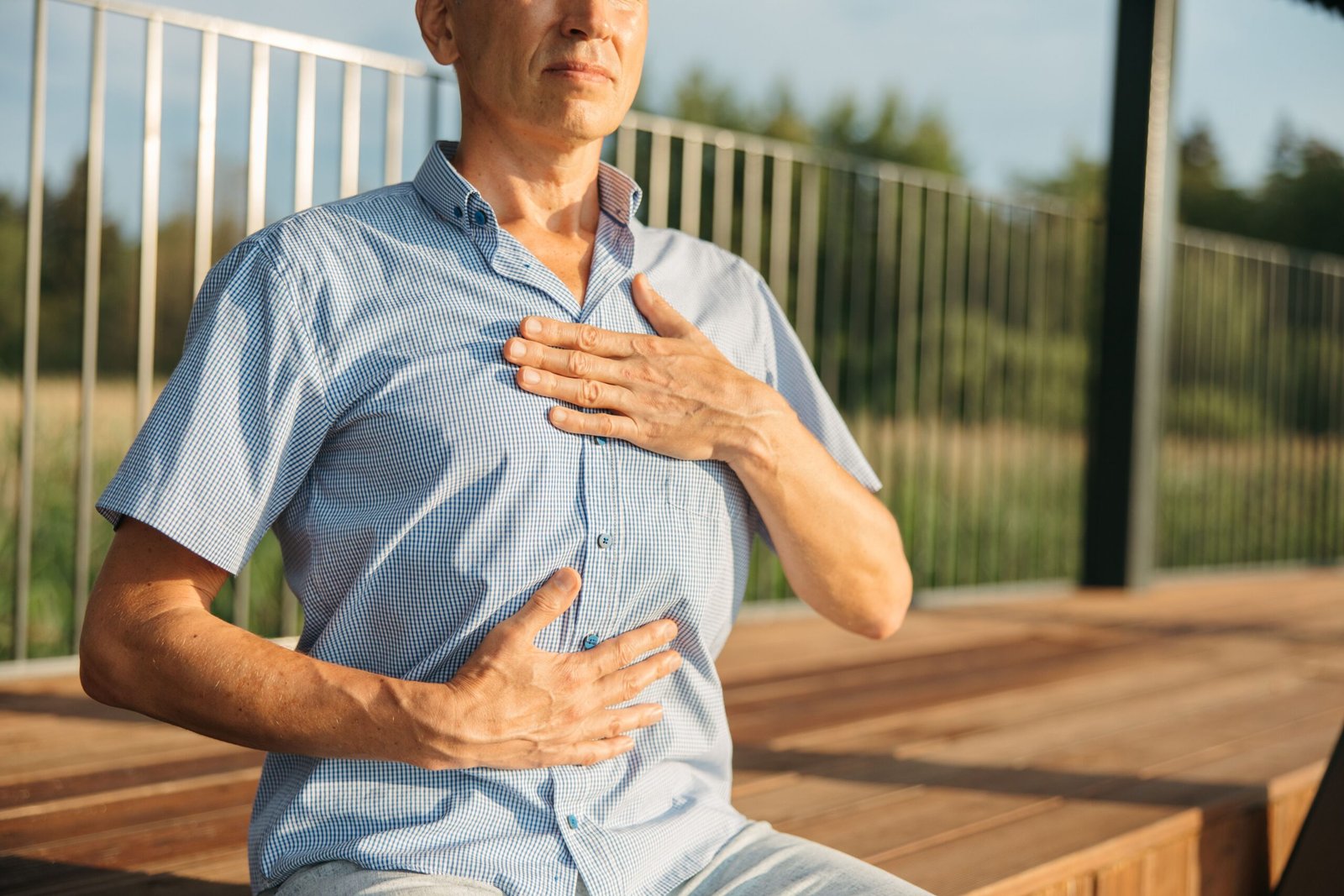
- Place one hand on your chest and one on your belly.
- Inhale slowly through your nose, letting your belly rise while keeping your chest relatively still.
- Exhale slowly through your mouth or nose, feeling your belly fall.
- Continue for 5 to 10 minutes, keeping the breath slow and steady.
Many people breathe shallowly into their chest without realizing it, especially when stressed. Diaphragmatic breathing retrains your body toward deeper, more efficient breaths, and it’s a great starting point if you’re new to breathwork.
2. Box Breathing (Square Breathing)
Box breathing gained popularity partly because it’s used by military personnel and first responders to stay calm under pressure, but it has legitimate research support too. The technique involves four equal phases: inhale, hold, exhale, and hold, each for the same count, which is why it’s called “box” breathing.
Studies on structured breath holds combined with slow breathing have shown reductions in perceived stress and improvements in mood. The equal timing seems to help because it gives your mind something concrete to focus on, which can interrupt anxious or racing thoughts, while the slow overall pace still triggers the calming parasympathetic response.
How to do it:
- Inhale through your nose for a count of 4.
- Hold your breath for a count of 4.
- Exhale slowly through your nose or mouth for a count of 4.
- Hold again for a count of 4.
- Repeat for 4 to 8 rounds.
If a 4-count feels uncomfortable at first, start with a 3-count and build up. The goal isn’t to strain but to create a steady, even rhythm.
3. 4-7-8 Breathing
Popularized by Dr. Andrew Weil, the 4-7-8 technique is built around the idea that a longer exhale relative to the inhale produces a stronger relaxation response. You inhale for 4 counts, hold for 7, and exhale for a full 8 counts.
While much of the popular attention on this method comes from wellness spaces rather than peer-reviewed journals, the underlying mechanism, extended exhalation activating the vagus nerve and parasympathetic system, is well documented in respiratory physiology research. Several small studies on extended-exhale breathing patterns have found reductions in heart rate and self-reported anxiety, and this technique is often recommended by sleep specialists as a way to help the body wind down before bed.
How to do it:
- Sit or lie comfortably. Let your tongue rest gently behind your upper front teeth if that’s comfortable for you.
- Exhale completely through your mouth.
- Inhale quietly through your nose for a count of 4.
- Hold your breath for a count of 7.
- Exhale completely through your mouth for a count of 8, making a soft whoosh sound.
- Repeat for 4 cycles to start.
A word of caution: holding your breath for 7 counts can feel like a lot if you’re a beginner. It’s fine to shorten the ratio at first (like 2-4-6 seconds) and work up to the full version over time.
4. Pursed Lip Breathing
Pursed lip breathing is one of the most clinically studied breathing techniques, particularly for people with chronic respiratory conditions like COPD (chronic obstructive pulmonary disease) and asthma. It’s simple: you inhale through your nose and exhale slowly through pursed lips, as if you were gently blowing out a candle.
Multiple clinical studies have shown that pursed lip breathing reduces breathlessness, slows respiratory rate, and improves oxygen exchange in people with lung conditions. It works by keeping the airways open slightly longer during exhalation, which helps trapped air escape more effectively. Even for people without respiratory conditions, this technique can be a useful tool during moments of acute stress or panic, since the controlled exhale naturally slows down a racing breath.
How to do it:
- Inhale slowly through your nose for about 2 counts.
- Purse your lips as if you’re about to whistle.
- Exhale slowly and gently through pursed lips for about 4 counts, twice as long as the inhale.
- Repeat for several minutes as needed.
This one is especially useful in the moment, like if you notice your breathing getting fast and shallow during a stressful situation.
5. Alternate Nostril Breathing (Nadi Shodhana)
This technique comes from yogic breathing traditions but has picked up a fair amount of scientific interest in recent years. It involves breathing in through one nostril, holding briefly, and exhaling through the other, alternating back and forth.
Research published in the International Journal of Yoga and other physiology journals has found that alternate nostril breathing can reduce blood pressure, lower heart rate, and improve measures of autonomic balance. Some studies have also found improvements in attention and cognitive performance after regular practice, possibly because the technique requires enough concentration to naturally quiet a busy mind.
How to do it:
- Sit comfortably and relax your shoulders.
- Use your right thumb to close your right nostril.
- Inhale slowly through your left nostril.
- Close your left nostril with your ring finger, release your thumb, and exhale through your right nostril.
- Inhale through your right nostril.
- Close your right nostril, release your left, and exhale through your left nostril.
- This completes one round. Continue for 5 to 10 rounds.
This one takes a bit more coordination than the others, so don’t worry if it feels awkward at first. It becomes smoother with practice.
6. Resonance Breathing (Coherent Breathing)
Resonance breathing, sometimes called coherent breathing, involves breathing at a rate of about 5 to 6 breaths per minute, which for most people works out to roughly 5-second inhales and 5-second exhales with no holding in between. This rate is believed to maximize heart rate variability and create what researchers call “resonance” between your breathing and cardiovascular systems.
This is one of the more rigorously studied techniques in the clinical literature, particularly in research on depression and anxiety. A number of studies, including ones using biofeedback devices to help people find their optimal breathing rate, have found that resonance breathing improves mood, reduces anxiety symptoms, and increases HRV in ways that are measurable and consistent. Some researchers consider it one of the most reliable techniques for activating the parasympathetic nervous system precisely because it doesn’t require any breath-holding, which can be difficult for some people to sustain.
How to do it:
- Sit or lie in a comfortable position.
- Inhale slowly through your nose for about 5 seconds.
- Exhale slowly through your nose or mouth for about 5 seconds.
- Keep the breath smooth and continuous, without pausing between inhale and exhale.
- Continue for 10 to 20 minutes for the deepest effect, though even a few minutes can help.
If counting feels distracting, a simple trick is to breathe in time with a slow, steady mental count or use a metronome app or breathing pacer video.
7. The Physiological Sigh
This technique has gotten more attention recently thanks to research from Stanford University, particularly studies led by neuroscientist Andrew Huberman and colleagues. The physiological sigh involves a specific pattern: two inhales through the nose, the second one shorter and sharper than the first, followed by one long, slow exhale through the mouth.
This pattern actually mimics something your body does naturally during sleep and in moments of stress. It’s called a physiological sigh because it happens spontaneously to reinflate small collapsed sacs in the lungs called alveoli. Research published in Cell Reports Medicine found that practicing physiological sighs intentionally for just a few minutes a day was more effective at improving mood and reducing physiological arousal than some other common breathing and mindfulness practices tested in the same study, and the effects showed up quickly, in some cases within just a few days of practice.
How to do it:
- Take a deep inhale through your nose.
- Without exhaling, take a second, shorter inhale through your nose to top off your lungs.
- Exhale slowly and fully through your mouth, letting the breath be long and relaxed.
- Repeat for 1 to 3 cycles when you need quick relief from stress.
This is one of the fastest-acting techniques on this list, and many people find it especially useful in acute moments of anxiety or overwhelm, since it takes less than a minute to complete a few rounds.
What the Research Actually Tells Us
It’s worth being honest about the state of the science here. Breathing research has grown a lot, but it’s still a developing field. Many studies are small, and results can vary depending on how a technique is practiced, for how long, and by whom. That said, a few consistent patterns show up across the research:
Slower breathing, generally in the range of 5 to 7 breaths per minute, tends to have the strongest and most consistent effects on the nervous system. Longer exhales relative to inhales seem to enhance the calming effect, which is why so many of these techniques emphasize a slow, extended breath out. Consistency matters more than intensity. Most of the meaningful benefits, especially for anxiety and stress, come from regular practice over weeks, not from doing a technique once and expecting an immediate transformation. And breathing exercises appear to work best as part of a broader approach to managing stress and anxiety, not as a standalone cure.
None of these techniques are a replacement for professional support if you’re dealing with a diagnosed anxiety disorder, panic disorder, or another mental health condition. Think of them as tools that can complement therapy, medication, or other treatment, not substitute for it.
Getting Started Without Overwhelming Yourself
If you’re new to breathwork, you don’t need to try all seven of these at once. A good approach is to pick one technique, ideally something simple like diaphragmatic breathing or the physiological sigh, and practice it for a few minutes a day for a week or two before adding anything else. Notice how you feel before and after. Some people find morning practice helps set a calm tone for the day, while others prefer using these techniques in the evening to wind down or in the moment when stress actually hits.
It’s also worth noting that some people, especially those with certain respiratory or cardiovascular conditions, should check with a doctor before starting breath-holding techniques like box breathing or 4-7-8 breathing. If you ever feel dizzy or lightheaded while practicing, stop, breathe normally, and ease back into slower techniques without holds.
Final Thoughts
Breathing might be the most underrated tool most of us have for managing stress and anxiety. It’s free, it’s always available, and unlike a lot of wellness trends, several of these techniques have genuine scientific research behind their effects on the nervous system. You don’t need to become an expert or spend hours practicing. A few focused minutes a day, using a technique that actually resonates with you, can make a real difference over time.
Start small, stay consistent, and pay attention to what your body tells you. Sometimes the most powerful changes come from paying closer attention to something you’ve been doing your whole life without a second thought.