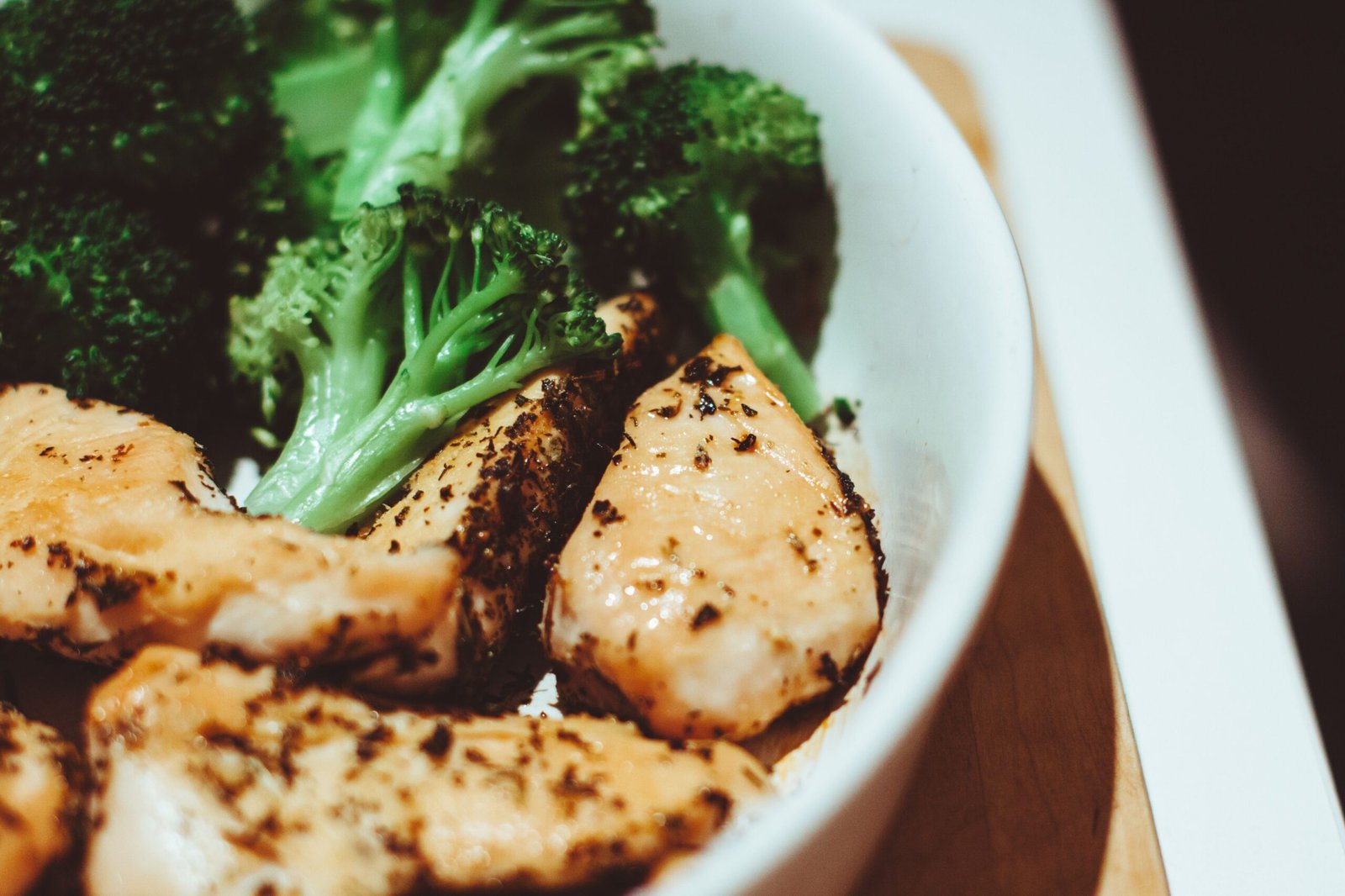
If you’ve spent any time scrolling through fitness content lately, you’ve probably noticed that protein is having a moment. Protein powders, protein bars, and protein-enriched everything from pasta to ice cream. It can feel like everyone around you is chasing some magic number of grams per day, and if you’re not hitting it, you’re somehow falling behind.
Take a breath. Protein is important, but it doesn’t need to be complicated or anxiety-inducing. This guide will walk you through what protein actually does in your body, how much you really need based on real science (not marketing), and how to think about your own personal target without losing your mind counting every gram.
Why Protein Matters in the First Place
Protein is one of the three macronutrients, along with carbohydrates and fats, that your body needs in relatively large amounts to function. But protein plays a role that’s a little different from the other two.
Carbohydrates and fats are mostly about energy. Protein is about structure and function. Your muscles, skin, hair, nails, enzymes, hormones, and even your immune system all rely on protein. It’s made up of amino acids, which are often described as the building blocks of the body, and there are 20 different amino acids that get combined in different ways to build the thousands of proteins your body uses every day.
Nine of those amino acids are considered essential, meaning your body can’t make them on its own. You have to get them from food. This is part of why protein quality matters, not just quantity, but we’ll get to that in a bit.
Beyond building and repairing tissue, protein does a few other things worth knowing about:
- It helps you feel full. Protein is more satiating than carbs or fat, gram for gram, which is one reason it often comes up in conversations about weight management.
- It helps preserve muscle mass, especially as you age or if you’re in a calorie deficit.
- It supports recovery after exercise or injury.
- It plays a role in producing hormones and enzymes that regulate nearly every process in your body.
So yes, protein deserves some of the attention it’s getting. The question is just how much attention and how many grams you actually need.
The Official Recommendation (And Why It’s Probably Too Low for You)
The most commonly cited number for protein intake is the Recommended Dietary Allowance, or RDA, which sits at 0.8 grams of protein per kilogram of body weight per day. For a person weighing 70 kilograms (about 154 pounds), that works out to roughly 56 grams of protein a day.
Here’s the thing about the RDA that a lot of people don’t realize: it was designed to prevent deficiency in the average sedentary adult, not to help you thrive, build muscle, or perform at your best. It’s the minimum amount needed to avoid your body slowly breaking down its own tissue for amino acids. Think of it as a floor, not a target.
This is a really important distinction. If you’re moderately active, trying to build strength, recovering from a workout routine, or just trying to age well and maintain muscle mass over time, the RDA is likely lower than what would actually serve you.
Nutrition researchers have increasingly pushed back on treating the RDA as an optimal number. Many experts now suggest that most adults, even those who aren’t athletes, would benefit from something closer to 1.0 to 1.6 grams per kilogram of body weight per day, depending on their goals and activity level.
So What’s Your Actual Number?
Let’s get practical. Instead of one universal number, think of protein needs as a range that shifts depending on who you are and what you’re doing with your body. Here’s a general breakdown:
Sedentary adults, general health: 0.8 to 1.0 grams per kilogram of body weight. This covers basic maintenance for someone who isn’t particularly active but still wants to support normal bodily functions.
Recreationally active adults: 1.0 to 1.4 grams per kilogram. If you’re walking regularly, doing some light exercise a few times a week, or just generally moving your body, this range supports your activity without over-focusing on protein.
Strength training or building muscle: 1.6 to 2.2 grams per kilogram. This is the range most consistently supported by research for people who are lifting weights and trying to build or maintain muscle mass. Interestingly, going much above 2.2 grams per kilogram doesn’t seem to provide additional muscle-building benefit for most people. More isn’t always better once you’ve crossed this threshold.
Endurance athletes: 1.2 to 1.6 grams per kilogram. Runners, cyclists, and other endurance athletes need protein too, both for muscle repair and because endurance training can use some protein for fuel, especially during long sessions.
Older adults (65+): 1.0 to 1.2 grams per kilogram, or higher if you’re also strength training. As we age, our bodies become less efficient at using protein to build and maintain muscle, a phenomenon researchers call anabolic resistance. This means older adults often need more protein, not less, to maintain the same muscle mass they had when they were younger.
Weight loss or calorie deficit: 1.2 to 1.6 grams per kilogram, sometimes higher. When you’re eating fewer calories than you burn, higher protein intake helps protect your muscle mass so that more of the weight you lose comes from fat rather than muscle.
To translate this into something concrete, let’s say you weigh 68 kilograms (about 150 pounds) and you strength train a few times a week. Using the 1.6 to 2.2 gram range, your target would fall somewhere between 109 and 150 grams of protein per day. That’s a pretty wide range, and that’s okay. Nutrition isn’t about hitting an exact number every single day. It’s about consistency over time.
A Quick Word on Using Body Weight vs. Ideal Body Weight
If you’re carrying a significant amount of excess body fat, calculating protein needs based on your total body weight can overestimate what you actually need, since fat tissue doesn’t require the same protein support that muscle does. In these cases, some nutrition professionals recommend calculating protein needs based on a more moderate or “adjusted” body weight rather than total body weight. This isn’t something you need to stress over as a beginner, but if you’re working with a registered dietitian, this is the kind of nuance they can help you sort out.
What Does That Actually Look Like on a Plate?
Grams per kilogram is useful for calculating targets, but it doesn’t mean much when you’re standing in your kitchen trying to figure out what to eat. Let’s ground this in real food.
Here’s roughly how much protein you’ll find in some common foods:
- 3 ounces of chicken breast (about the size of a deck of cards): 26 grams
- 1 cup of Greek yogurt: 20 to 23 grams
- 3 ounces of salmon: 22 grams
- 1 cup of cooked lentils: 18 grams
- 2 large eggs: 12 grams
- 1 cup of cooked quinoa: 8 grams
- 1 scoop of whey protein powder: 20 to 25 grams
- 1 cup of cooked black beans: 15 grams
- 1 ounce of almonds: 6 grams
- 1 cup of cottage cheese: 24 to 28 grams
If your target is around 120 grams per day, that might look like eggs and Greek yogurt at breakfast, a chicken salad at lunch, a protein shake as a snack, and salmon with lentils at dinner. It adds up faster than you might expect once you start paying attention.
Animal vs. Plant Protein: Does It Matter?
This is a common source of confusion, so let’s clear it up. Protein quality is often judged by how many of the essential amino acids a food contains and in what proportions. Animal proteins like meat, eggs, dairy, and fish are considered “complete” proteins because they contain all nine essential amino acids in adequate amounts.
Most individual plant proteins are lower in one or more essential amino acids, which is why they’re sometimes called “incomplete.” However, this doesn’t mean plant-based eaters are at a disadvantage. If you eat a variety of plant protein sources throughout the day, such as beans, lentils, grains, nuts, and seeds, you’ll naturally cover your amino acid bases. You don’t even need to combine them in the same meal, despite what older nutrition advice used to suggest. Your body maintains a pool of amino acids and can draw from what you’ve eaten across the day.
If you’re following a plant-based diet, it can be worth aiming slightly higher on your total protein target, since plant proteins tend to be somewhat less efficiently used by the body compared to animal proteins. Adding an extra 10 to 20 percent to your calculated target is a reasonable adjustment if you’re eating mostly or entirely plant-based.
Timing: Does It Really Matter When You Eat Protein?
You may have heard about the “anabolic window,” a supposed short period after exercise where you need to consume protein or lose out on muscle-building benefits. This idea has been significantly overstated in popular fitness culture.
While consuming protein after a workout is helpful, the window is much wider than the 30-minute panic that used to circulate. Research suggests that as long as you’re eating protein within a few hours of your workout, you’re capturing most of the benefit. What matters more than precise timing is your total protein intake across the day and spreading it out reasonably evenly across your meals rather than eating it all in one sitting.
Speaking of spreading it out, there’s decent evidence that distributing protein across three to four meals, with roughly 20 to 40 grams per meal, may be more effective for muscle building than eating the bulk of your protein in one large meal at dinner. This is partly because your body can only use so much protein for muscle synthesis at one time.
Common Myths Worth Clearing Up
“High protein diets damage your kidneys.” For people with healthy kidney function, there’s no strong evidence that higher protein intake causes kidney damage. This myth largely comes from studies on people who already have kidney disease, where protein restriction is sometimes recommended for a different reason. If you have any kidney concerns, it’s worth talking to your doctor, but for the average healthy adult, this isn’t something to lose sleep over.
“You need protein powder to hit your targets.” Protein powder is convenient, but it’s a supplement, not a requirement. Plenty of people hit their protein goals entirely through whole foods. Powder just makes it easier and faster, especially for people with busy schedules or smaller appetites.
“More protein always means more muscle.” As mentioned earlier, there’s a ceiling effect. Once you’re getting enough protein to support muscle repair and growth, usually around 1.6 to 2.2 grams per kilogram if you’re training, extra protein beyond that point mostly just gets used for energy or stored, not converted into additional muscle.
“Plant-based diets can’t provide enough protein.” With some planning, plant-based diets can absolutely meet protein needs, even for athletes. It just requires a bit more intentionality about variety and total intake.
Signs You Might Not Be Getting Enough
Most people in developed countries with reasonably varied diets aren’t at serious risk of protein deficiency, but if you’re significantly under-eating protein, especially while also under-eating calories overall, some signs to watch for include:
- Unexplained muscle loss or weakness
- Slow recovery from workouts or injuries
- Brittle hair or nails
- Frequent hunger or difficulty feeling satisfied after meals
- Slower wound healing
If you notice several of these together, it might be worth taking a closer look at your overall diet, ideally with the help of a healthcare provider or registered dietitian.
Putting This Into Practice: A Simple Starting Point
If all of this feels like a lot to process, here’s a simplified way to get started without overthinking it:
- Figure out your body weight in kilograms (divide your weight in pounds by 2.2).
- Pick a multiplier based on your activity level and goals from the ranges above.
- Multiply your weight in kilograms by that number to get a daily target in grams.
- Spread that target across three to four meals rather than trying to eat it all at once.
- Track your intake loosely for a week or two using a food tracking app just to get a feel for how much protein is actually in your normal meals. You likely won’t need to track forever, but it’s genuinely eye-opening the first time you see the numbers.
From there, adjust as needed. If you’re not seeing the results you want, whether that’s muscle gain, better recovery, or improved satiety, protein intake is a reasonable place to look, but it’s not the only factor. Sleep, overall calorie intake, training consistency, and stress management all play a role too.
The Bottom Line
Protein needs aren’t one-size-fits-all, and the right amount for you depends on your body weight, activity level, age, and goals. For most people, that means somewhere between 1.0 and 2.2 grams of protein per kilogram of body weight per day, with the higher end of that range generally reserved for people who are strength training or actively trying to build muscle.
You don’t need to obsess over hitting an exact number every single day, and you definitely don’t need expensive supplements to get there. What matters most is consistency, a reasonably varied diet, and giving your body what it needs to repair, recover, and function well. Start with a target that makes sense for your life right now, adjust as you learn more about your own body, and remember that protein is just one piece of a much bigger picture when it comes to feeling and performing your best.